Today we're sharing some updates made to reporting that make it both blazing fast, and completely customizable.
Getting a custom view of your reports can often feel slow and unintuitive in other accounting systems.
To solve this, we’ve engineered Kick reporting to feel nearly instant - even when you’re slicing, comparing, and changing views.
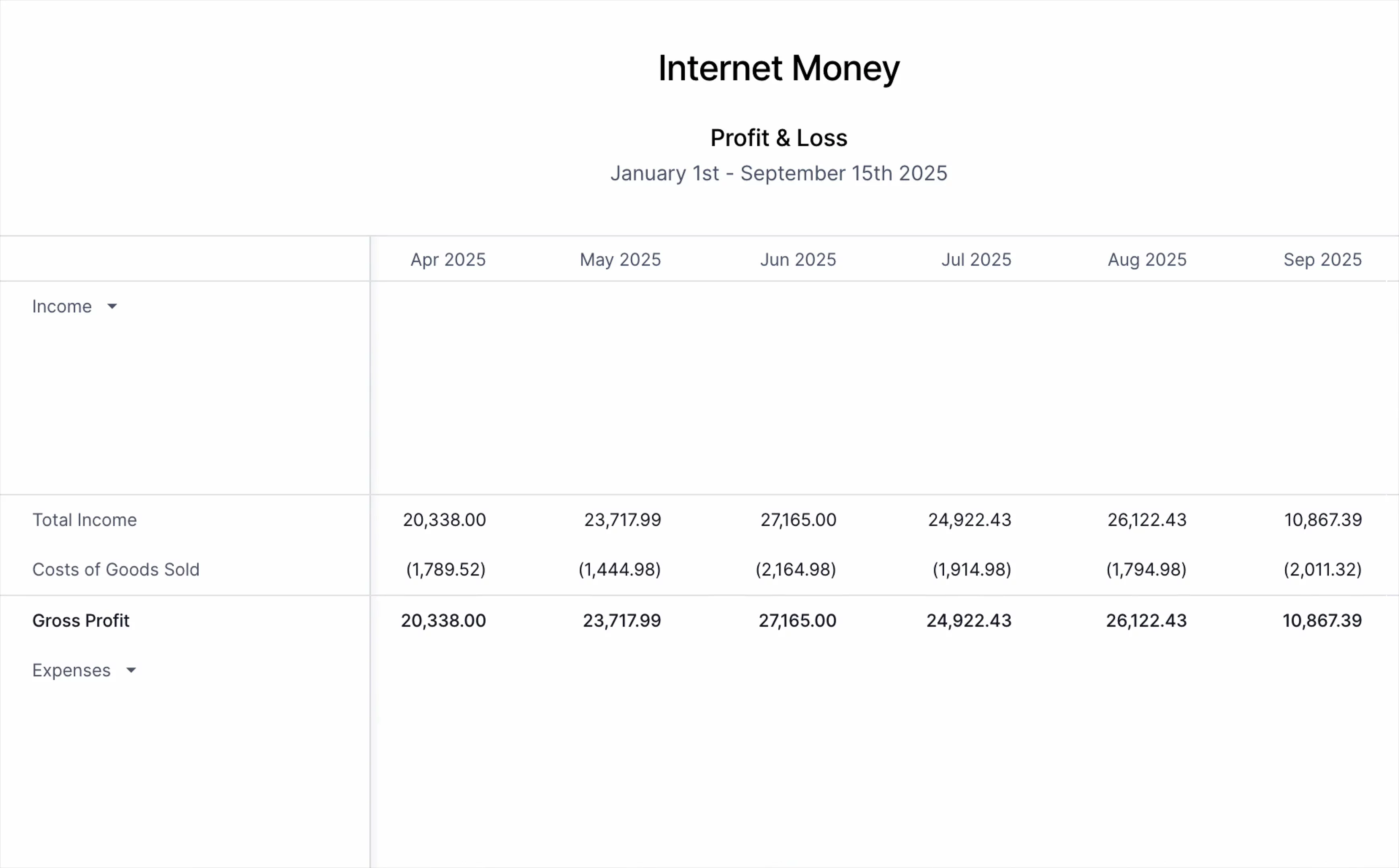
Customizable columns
Run your reports with columns broken out by:
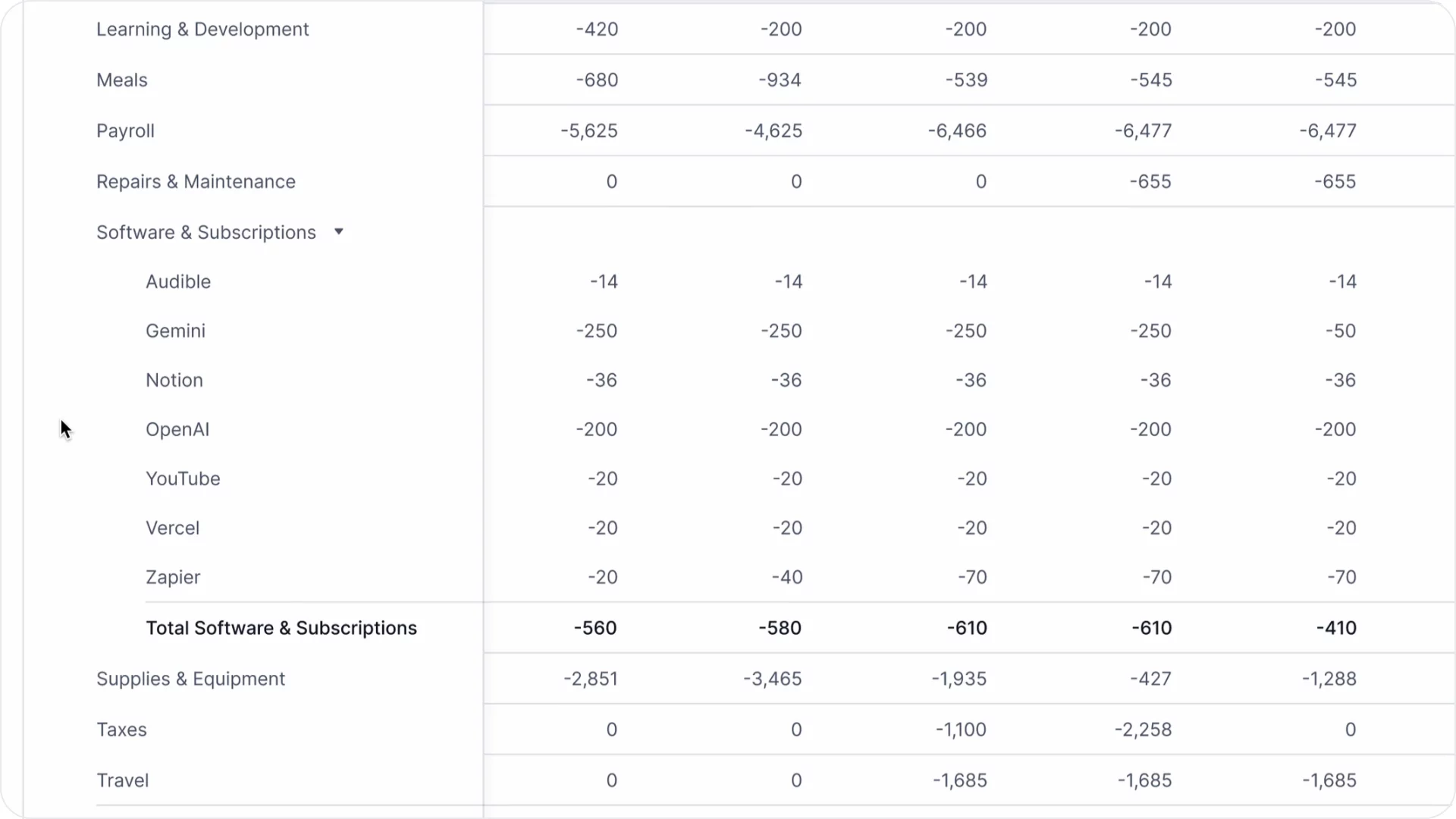
Expenses by Vendor
A new report that shows your spending broken out by vendor across any period. Spot expense trends, flag anomalies for your clients, or use it to eliminate unnecessary spending for your own business.
Custom periods
View any report by month, quarter, year or across all time. Pick the period that matches how you actually run your business.
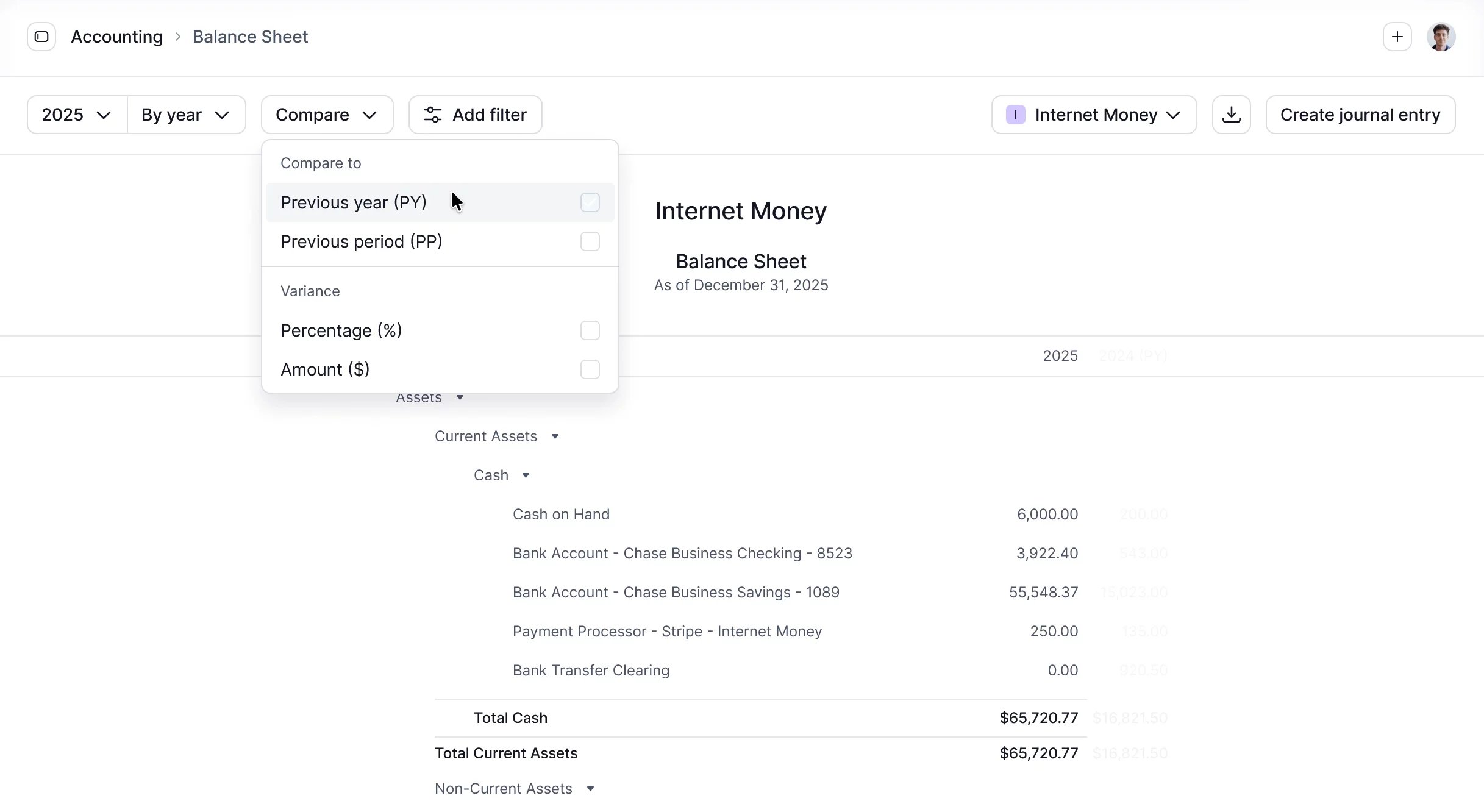
Compare to previous periods
Toggle on "Compare to" for all your reports to pull in a previous period alongside your current one. See the dollar and percentage change between periods at a glance.
To start customizing, head to the Accounting tab.
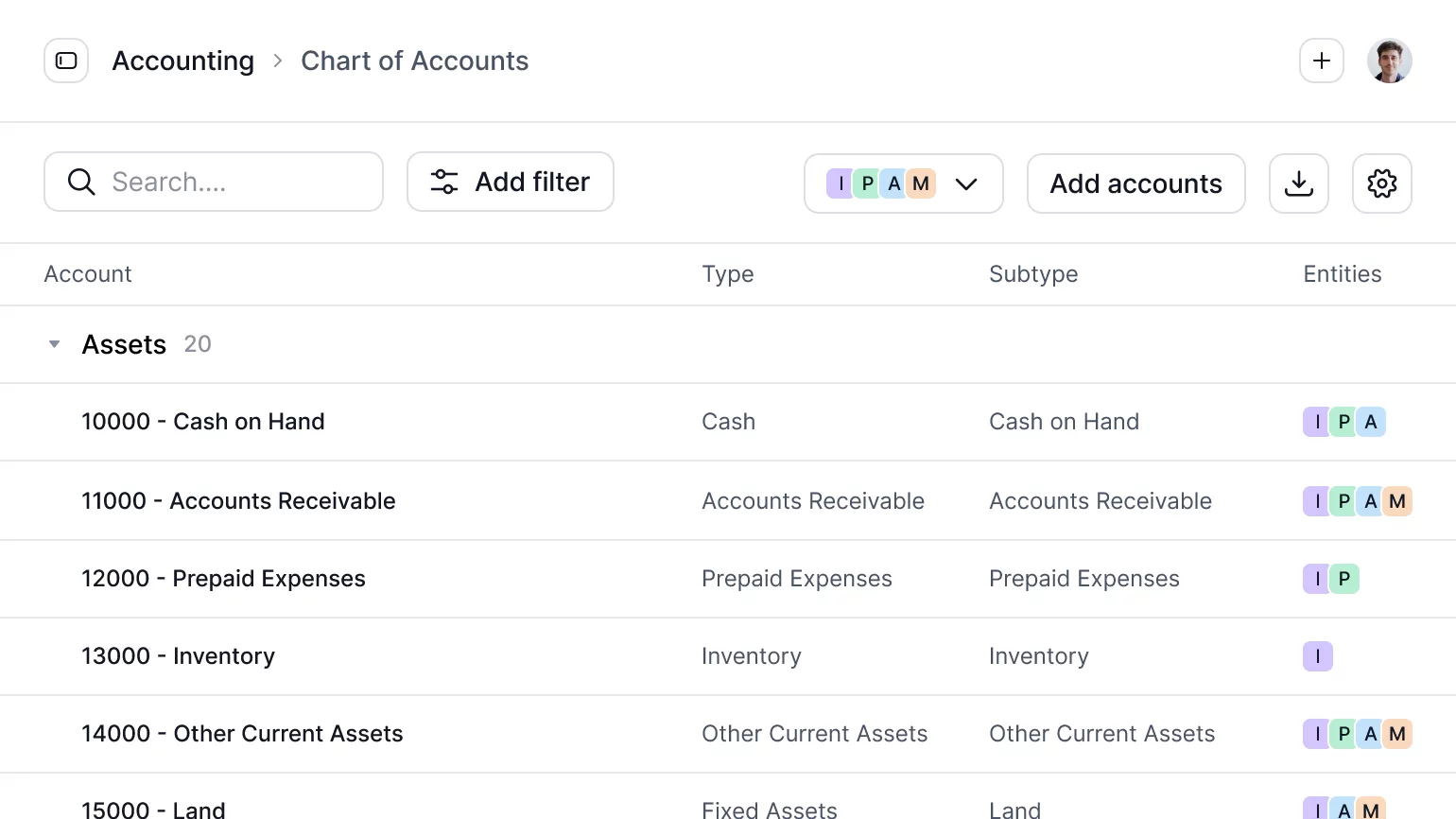
You can now create and manage your Chart of Accounts across entities in one place.
If you or your clients are running multiple businesses, keeping your Chart of Accounts consistent everywhere is harder than it should be.
With multi-entity Chart of Accounts, that's no longer the case:
To get started, head to the Accounting tab and open your Chart of Accounts.
• Collapse and expand on General Ledger: Collapse or expand all account sections at once. Accounts with many transactions auto-collapse by default for a cleaner view.
• Account type labels: The Accounts tab now shows the account type (credit card, bank, payment processor, etc.) at a glance.
• Opening balance adjustments: Added support for opening balance adjustment entries to true-up incorrect balances without affecting historical financials.
• Concurrent operation safety: Improved handling of simultaneous operations (e.g., Plaid syncing while merging accounts) to prevent race conditions that could leave data in an inconsistent state.
• Counterparty column: Added to manual journal entry creation as well as the General Ledger for all transaction-generated journal entries.
• PayPal foreign currency support: For transactions involving currency conversion, the original currency and amount are now stored and visible in transaction details.
• Amount filter on General Ledger: Narrow down entries by dollar value directly from the report.
• Change transaction class from journal entry drawer: Update a transaction's class directly from the drawer without navigating away.
• Create new GL account or counterparty during journal entry creation: Add new accounts or counterparties inline.
• Tasks digest email: Surfaces open and overdue tasks in your account so nothing falls through the cracks.
• Improved sync reliability: Reduced gaps and edge cases for Plaid and Stripe transactions to prevent missed or duplicated entries.
• Automated report width: Reports with a single column of data now automatically adjust to a set maximum width.
• Journal entries left behind after account deletion: When a financial account was deleted, ghost records were left behind causing balance sheet errors. Both sides of each entry are now removed together.
• Opening balance import: The system was allowing accounts to be imported under the wrong classification (e.g., an expense account filed under income). Validation is now enforced.
• Mercury statement filenames: Mercury bank statement files were losing their ".pdf" extension during import, causing the reconciliation tool to reject them. Fixed.
• Statement navigation jumping to wrong document: When the document list was sorted, clicking next/previous would jump to the wrong document. Navigation now follows the sorted order correctly.
• Dismissed errors reappearing: Dismissing a warning in the importer would sometimes cause it to reappear on revalidation, and occasionally crash. Dismissed errors are now tracked and won't reappear.
• Bulk transaction updates missing account information: When updating multiple transactions at once, account details and entity weren't included in the update, resulting in incomplete records. Fixed.
• New connection sync failure: Certain newly connected Plaid accounts were failing to sync on the first attempt. Fixed.
• Bookkeeping slowdowns under load: When multiple transactions were being processed simultaneously, they could get stuck waiting on each other, causing stalls. Fixed.
• "Other Entities" showing in accounting settings: A placeholder entity was incorrectly appearing in accounting settings. It has been removed.
• Ledger not found error: In certain edge cases, the system was throwing a "ledger not found" error causing 500 errors for affected users. Fixed.
• Date input garbling digits: Typing a year into a date picker could produce garbled results (e.g., "2024" becoming "0202"). Year entry now works correctly.
• Dropdown selections lost in modals and drawers: Clicking a dropdown option inside a modal or drawer would sometimes fail to register. Selection now works correctly in all contexts.
• Modal overlays in nested drawers: Opening a modal from inside a drawer now correctly shows the background overlay. Previously it was missing in nested contexts.
• Account merge returning wrong account: After merging two accounts, the API was returning the deleted account, causing the UI to show stale information. The correct merged account is now returned.
• Entity access unnecessarily restricted to admins: Certain screens were filtering entities to only show those the user was an admin of, even when that restriction wasn't needed. Fixed.
• Dropdown selectors collapsed height when empty: Dropdown selectors would shrink to near-zero height when no value was selected, making them hard to click. They now maintain a consistent height.
• Bulk Chart of Accounts import: Upload an existing Chart of Accounts from any accounting system. Accounts are mapped to the Kick CoA structure for you to review and accept.
• Transaction categorization: Better handling of ambiguous transactions that could fit multiple categories, with updated model prompting and evaluation.
• Improved confidence scoring: Better at distinguishing high-confidence predictions (auto-applied) from ambiguous ones (flagged for review).
• Better handling of incomplete data: Previously a single null field could discard an entire statement extraction batch. The system now skips only invalid rows and processes the rest.
• Transaction enrichment: Faster batching and enrichment, particularly for high-volume workspaces. The enrichment process is now safely retriable without risk of duplicate records or inconsistent state.
• PDF parsing: Fixed incorrect text extraction for PDFs using Symbol or ZapfDingbats font encodings.
• Extended processing timeout: Document extraction timeout increased from 3 to 5 minutes to prevent failures during large uploads.
We’ve updated our journal entry feature into a more powerful editor experience.
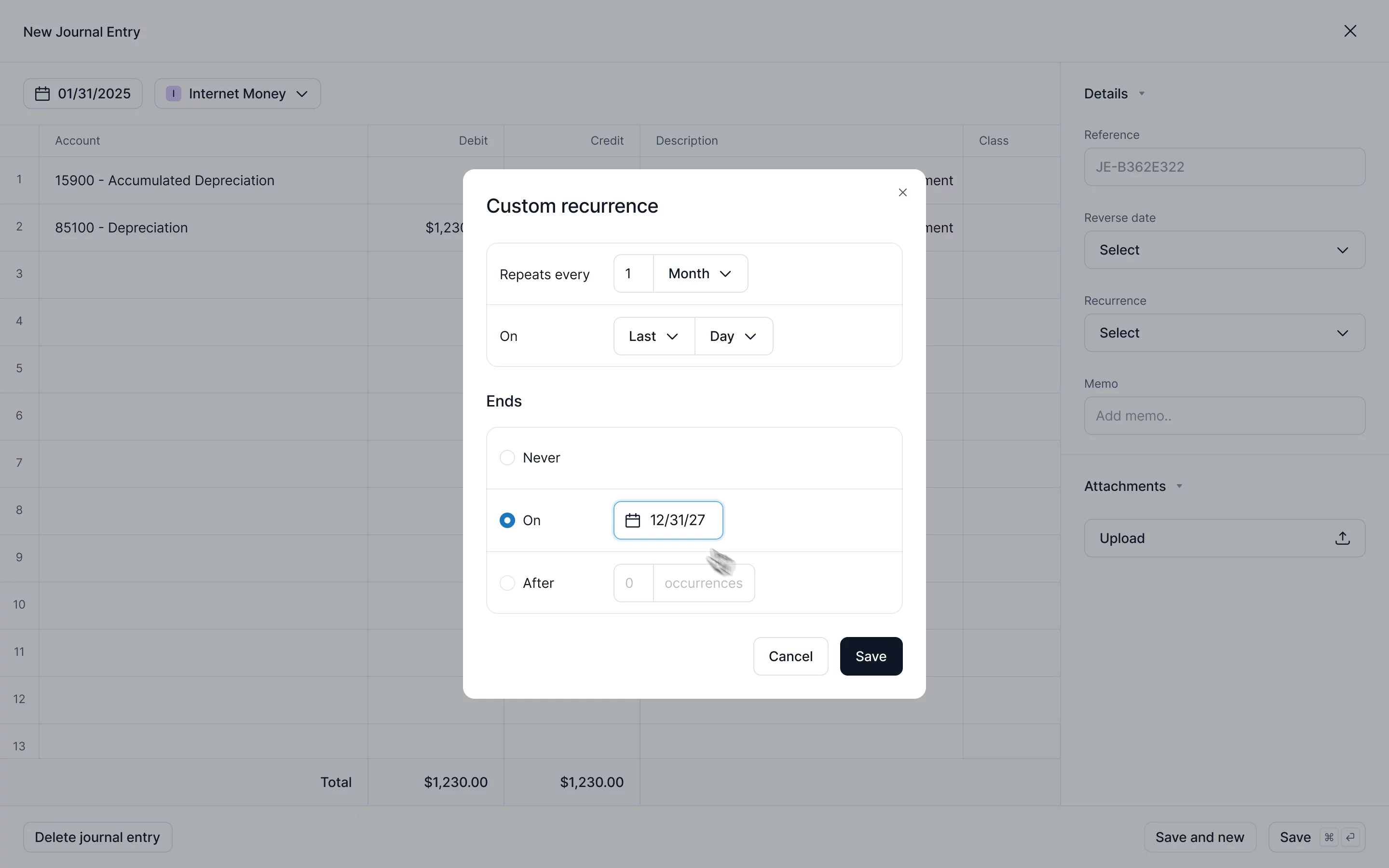
Recurring journal entries
Recurring journal entries help automate common accrual workflows like:
You can also start a recurring journal entry in prior periods, which is especially valuable for catch-up bookkeeping.
Set the recurrence schedule once and Kick will generate each entry automatically.
Automated reversals
This feature is most useful for temporary accruals and month-end adjustments. Select a reversal date when creating the entry and Kick will generate the reversal for you.
Spreadsheet UI
We’ve updated the journal entry editor so it feels like a spreadsheet you’re familiar with. You can:
This lets you handle all calculations in one place, without needing an offline spreadsheet.
To get started, head to the Accounting tab and click Create journal entry.
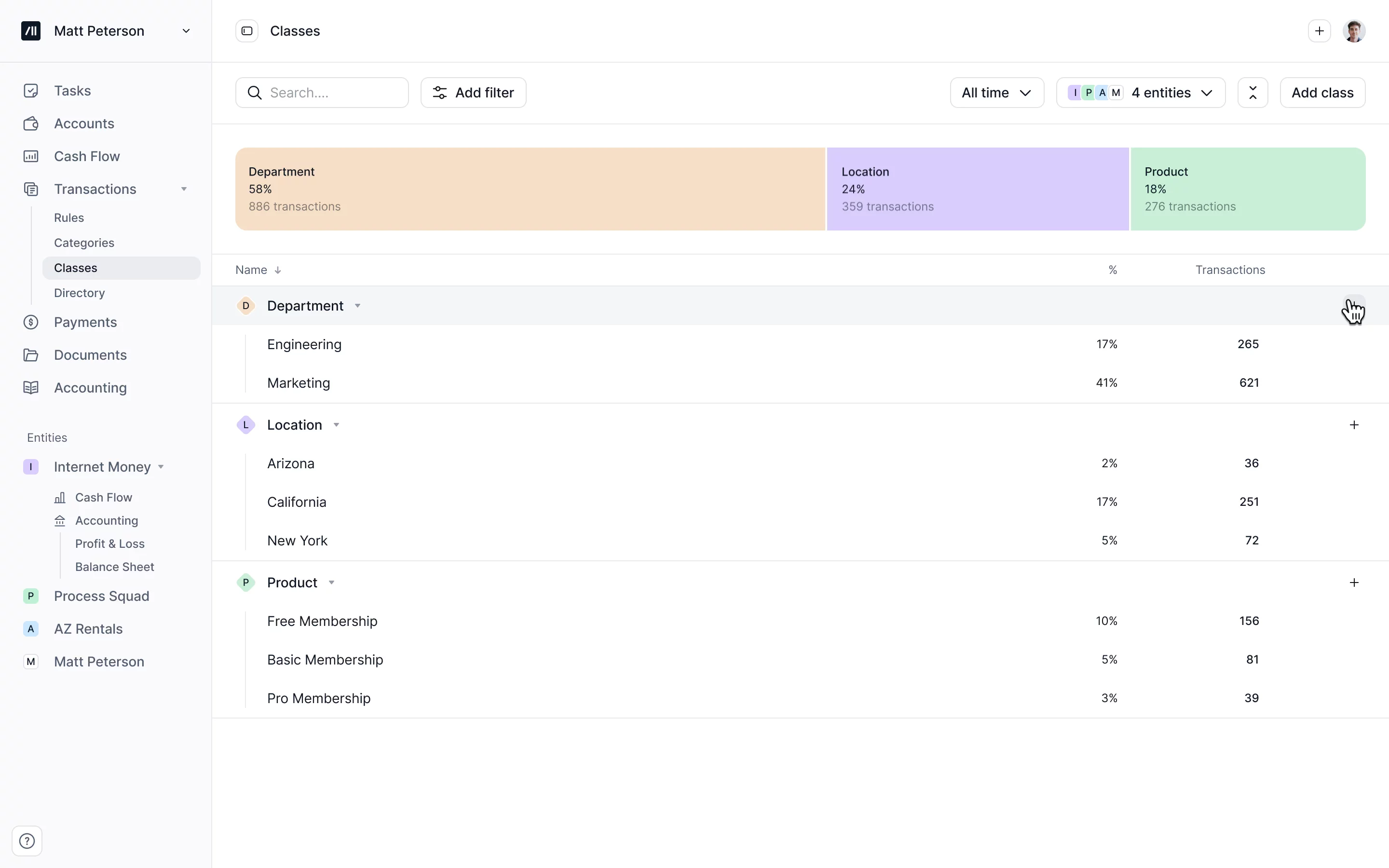
Today we’re sharing Custom Classes to give you a completely flexible way to organize your books.
For more complex businesses, including those with multiple locations, departments, business units, or custom systems, Classes make it simple to see how every part of your business is performing.
With Classes, you can:
If you’re using Gusto or Ramp, departments you’ve already created automatically sync as Classes in Kick, keeping your systems in sync without extra setup.
Unlimited Classes are available on the Plus Plan. To get started, head to the Classes tab and click Add class.
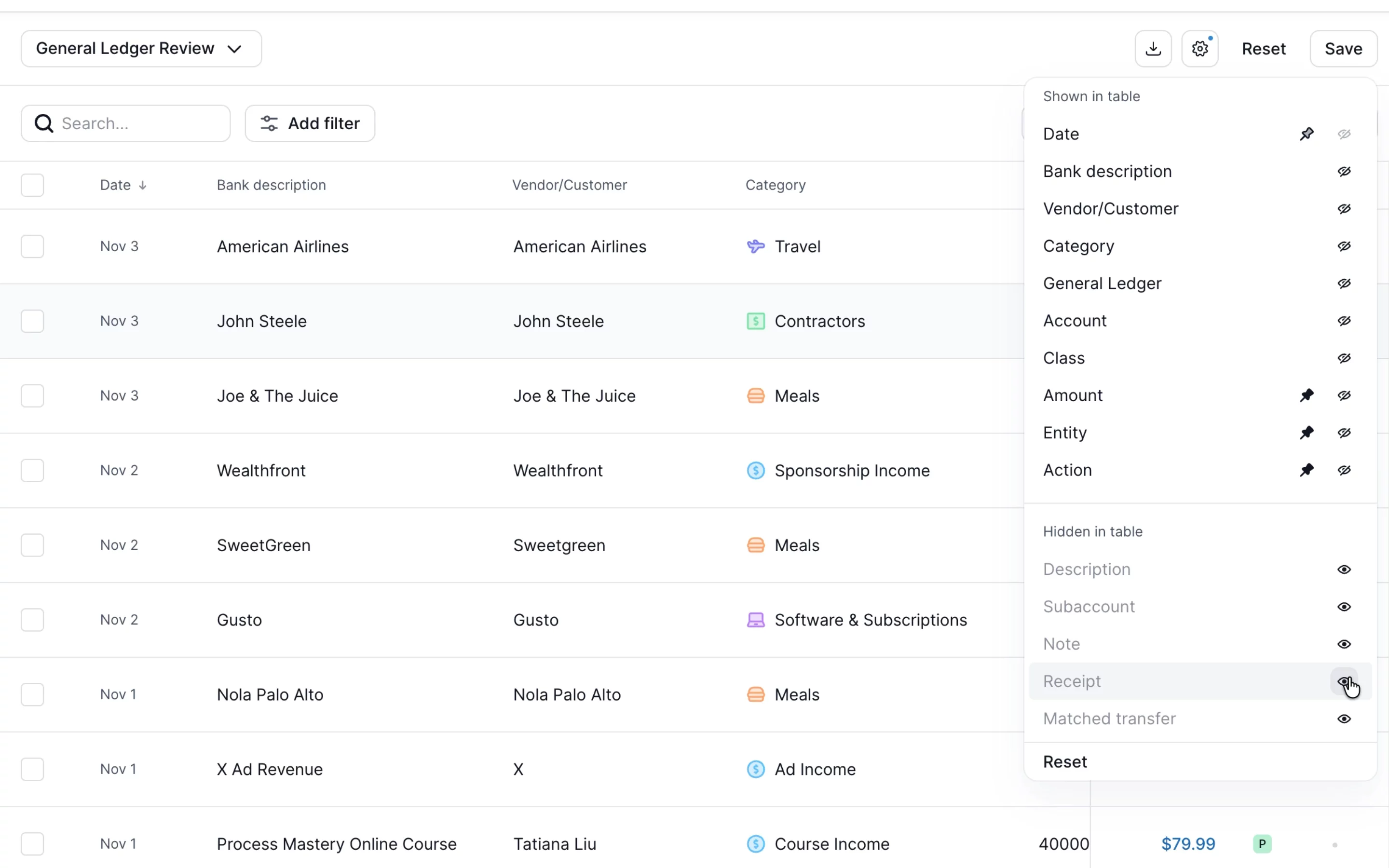
When you have a complex business or are managing multiple entities or clients, it’s important to be in control over your specific workflows.
To solve this, today we're sharing Views, where you can:
We’ve also started to expose keyboard shortcuts on the Transactions tab to help you rip through changes even faster.
Try a few of our favorites below:
Views are available on all plans, including Free. Head to Transactions and click the Views icon to start customizing.
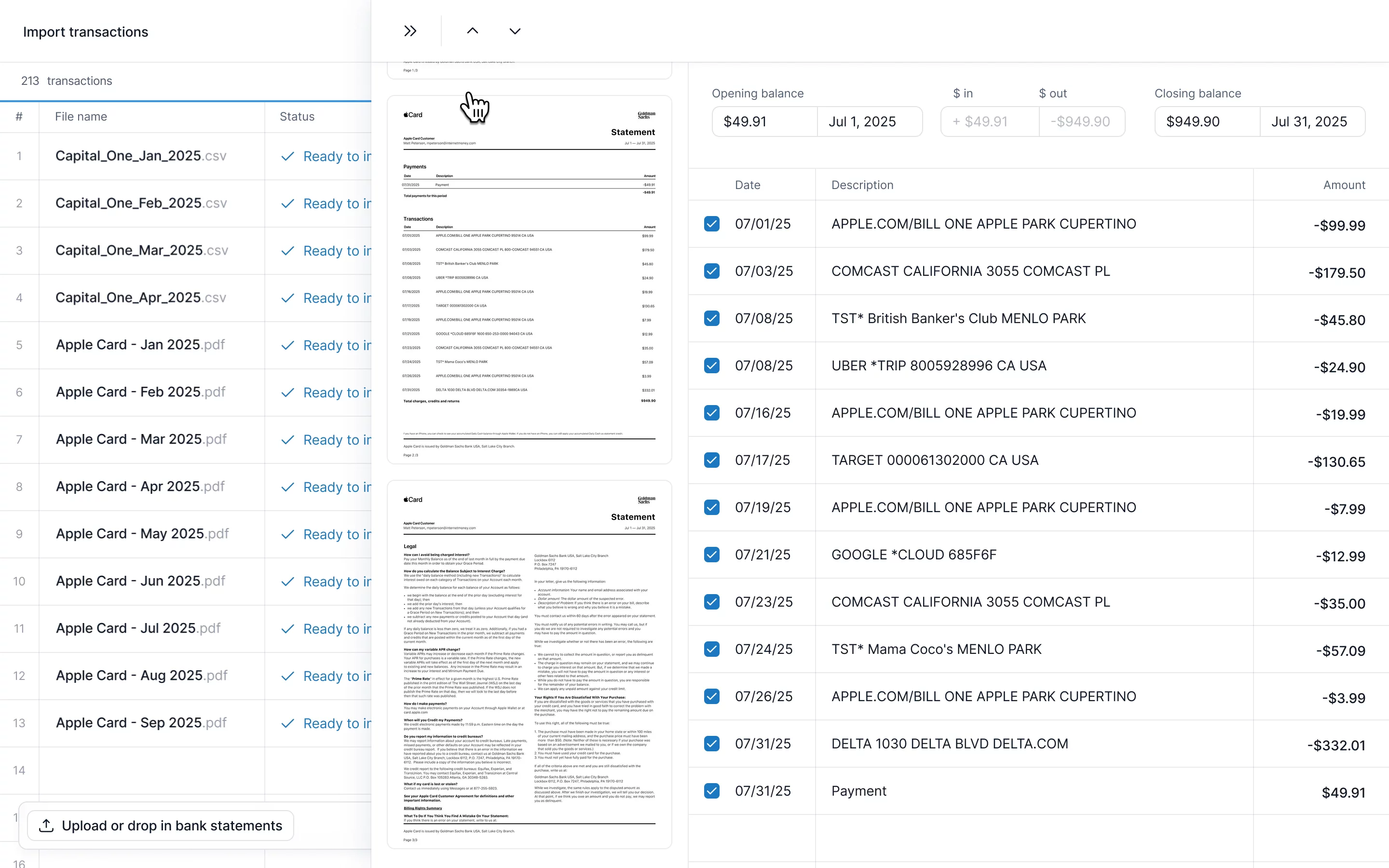
Today we’re sharing a new way to import transactions that’s making it easier for:
In the past, you or your Accountant would have to manually convert PDFs or reformat CSVs, just to get your transactions into your accounting software.
With Kick’s new Importer you can upload and automatically transform these documents into transactions in minutes.
How it works:
When you upload additional files, Kick will automatically detect which accounts they belong to — making it simple to stay up to date.
Importer is available on all paid plans. Excited to hear your feedback.
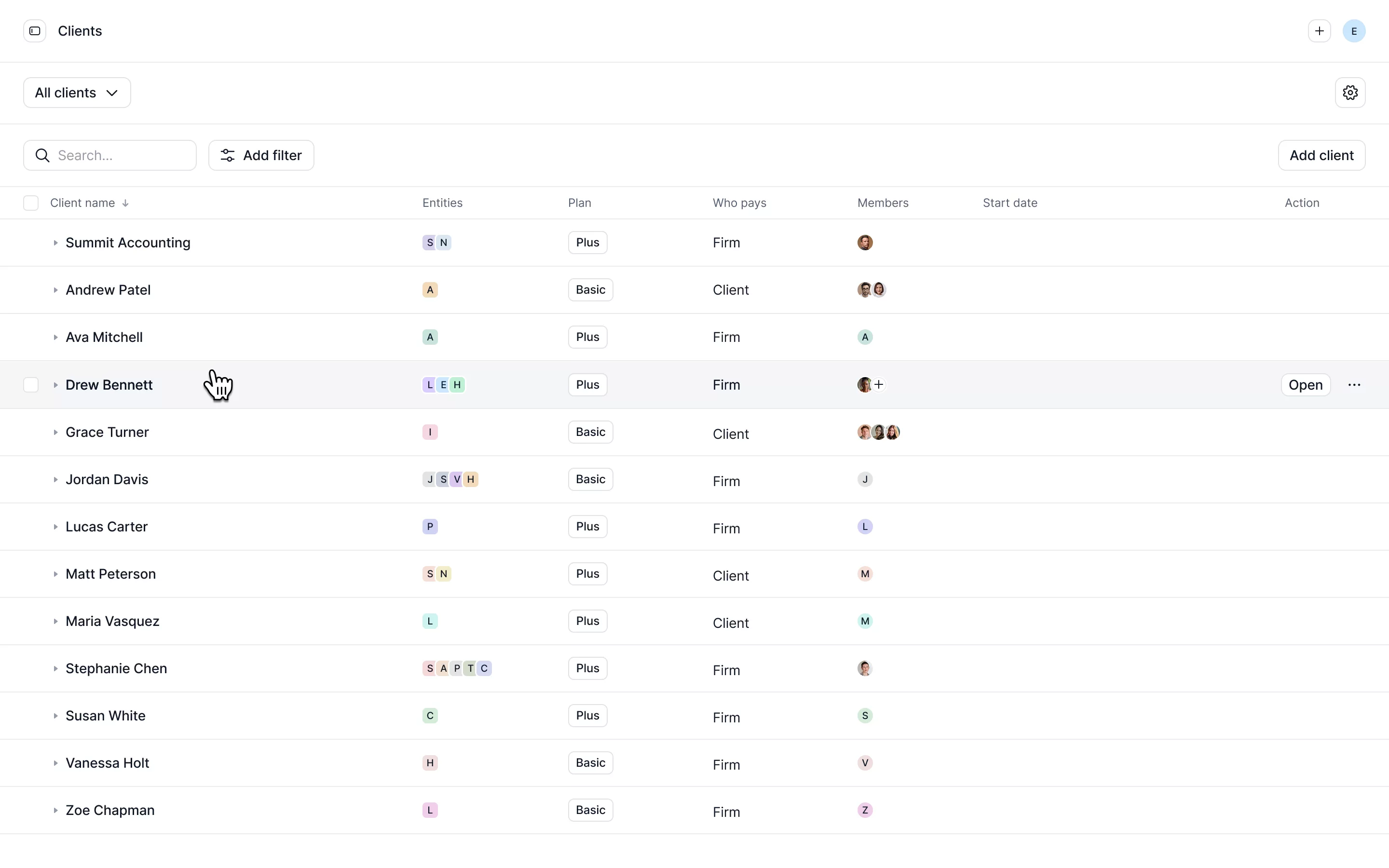
The Clients tab is a new way for Accountants to manage all their Kick clients in one place.
Think of it as your command center, where you can:
Best part — your simple clients with under $25k in annual business expenses are completely free.
Clients tab is only available for Accountants. Book a call and we'll pay $100 for 30 minutes of your time to learn more.
Automated bank and credit card reconciliation is now available to help you close the books faster, with confidence.
The problem with reconciliation today
Reconciliation is often considered complete when the balance in your accounting software matches your bank statement.
In reality, 5–10% of reconciliations contain errors or mismatches caused by:
When differences occur, you’re left spending hours matching hundreds or thousands of transactions one by one.
Introducing automated account reconciliation
To solve this, we’re now opening up access to automated account reconciliation in Kick.
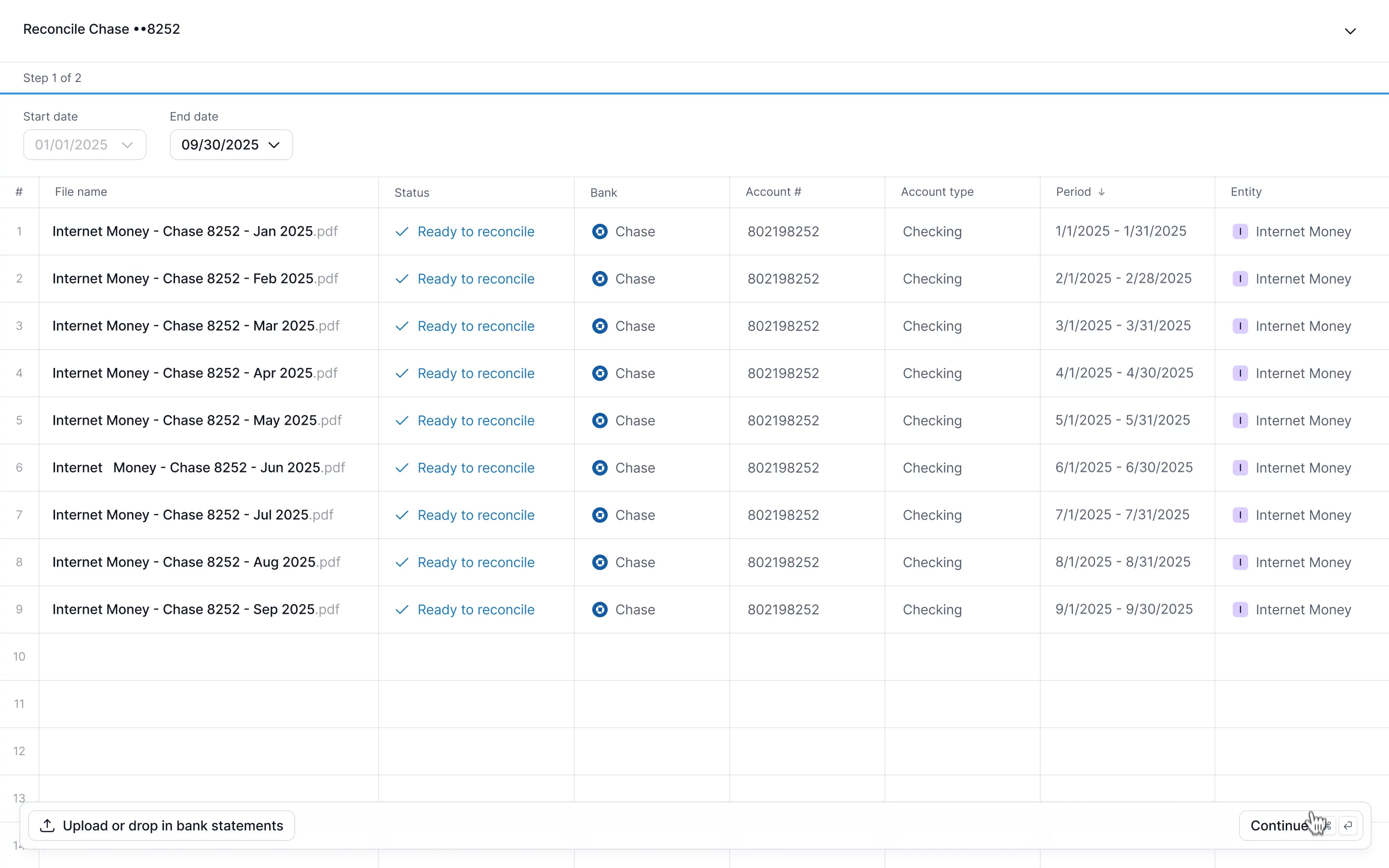
How it works:
Return on your keyboard.Unlike other accounting software, you can also upload multiple statements at once, making it possible to reconcile entire years in minutes, instead of hours.
The result is faster, more accurate reconciliation and less manual work.
And with Kick, you stay in full control—every suggested change is drafted for your approval.
Now available on Plus. Head to the Accounting tab and click Reconciliation to see it in action.
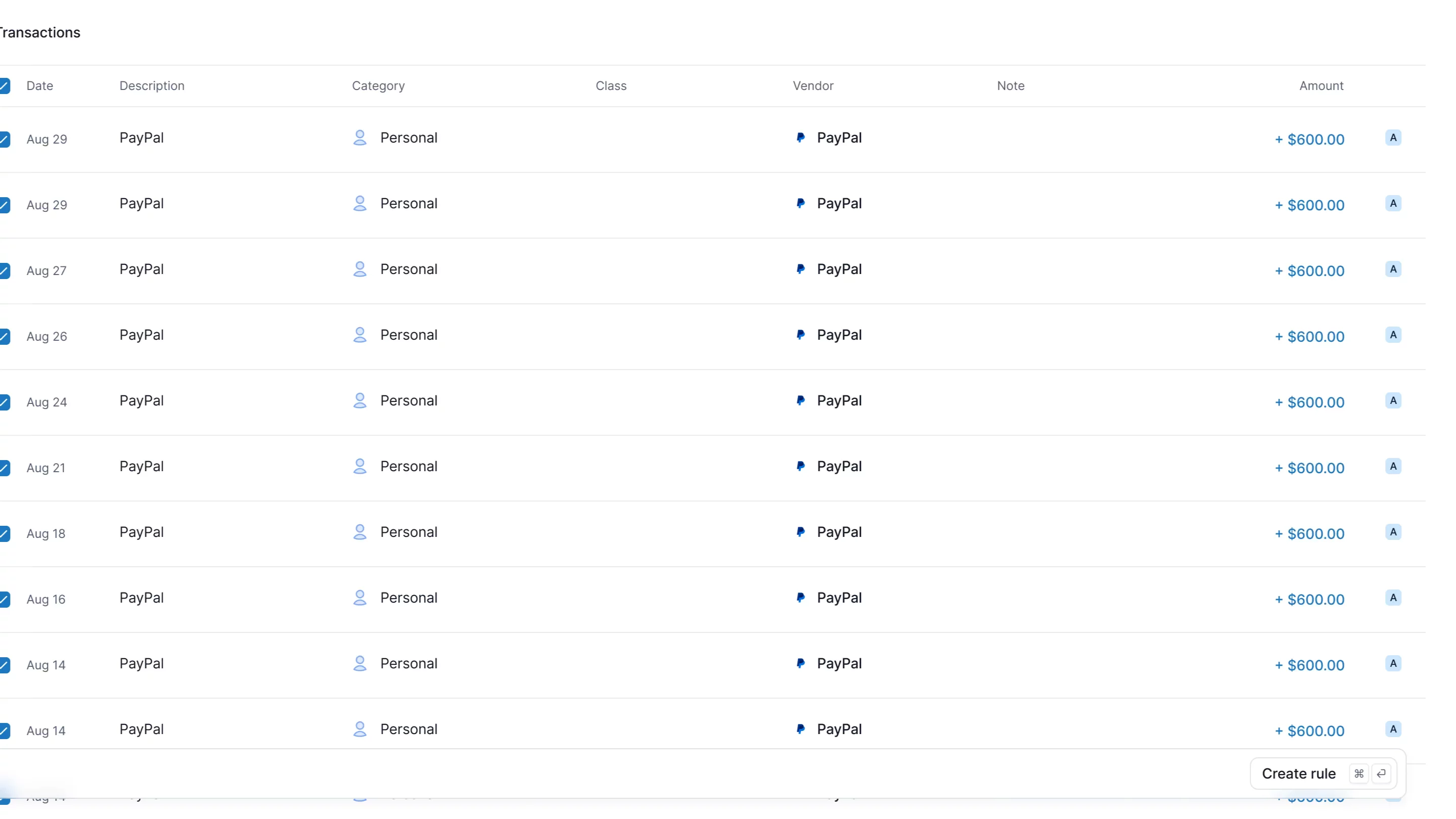
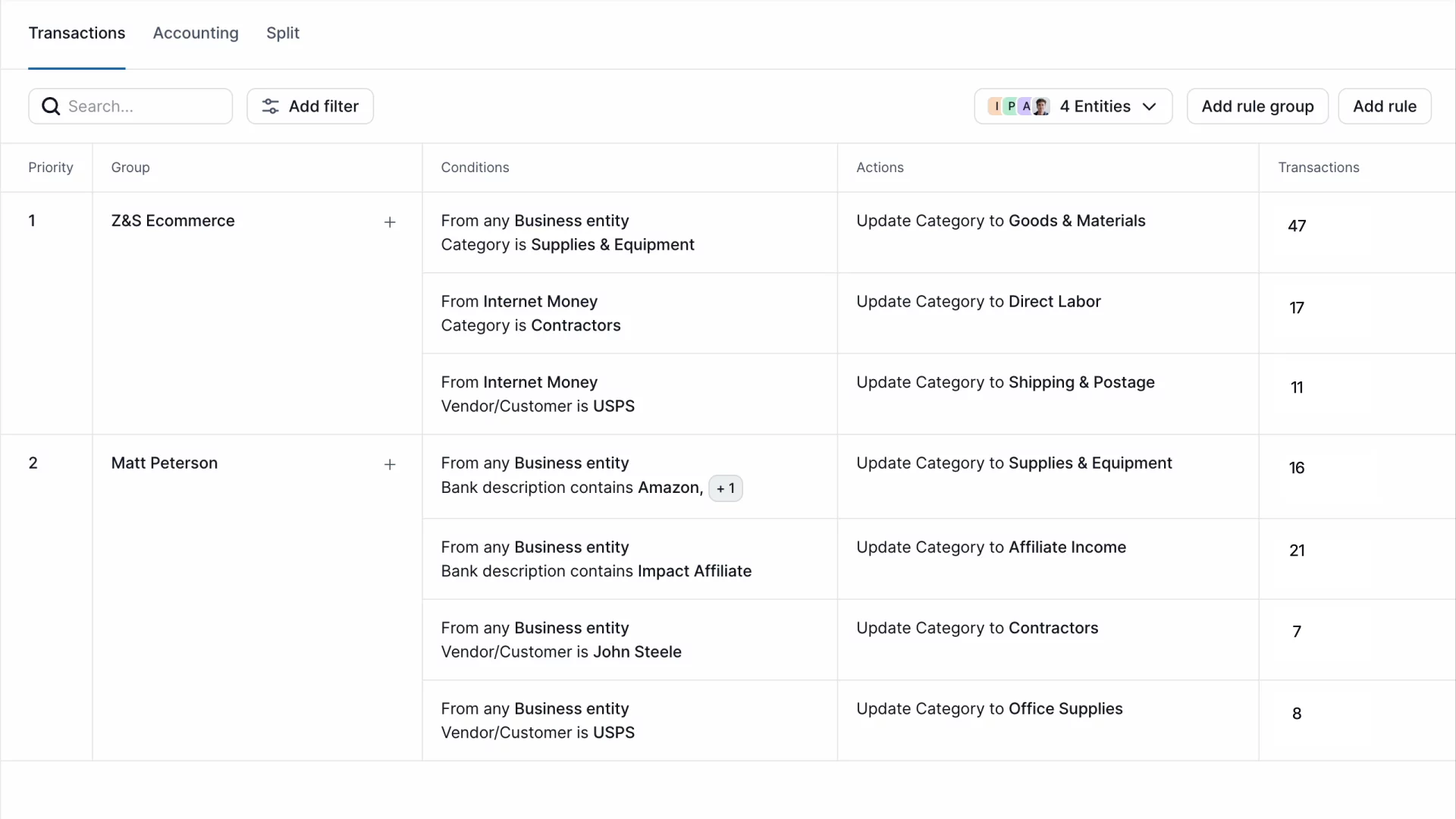
We’ve built Rules to give you full control over your transactions and accounting reports in Kick.
In the past, Kick automatically created Rules behind the scenes through our Actions feature. Now, we’re putting that same system into your hands—giving you the ability to personalize Kick for your Business or Clients.
Just chose your Conditions and create Actions that:
In addition to Transactions Rules, we’re also rolling out Accounting Rules, which give you the ability to override Kick’s automated Category to Chart of Accounts mapping. This gives you full flexibility to customize accounting reports for any industry.
To get started, go to the Transactions or Accounting tab within Rules and click “Add rule”.
Once your Rules are set up, you can “kick” back knowing your books are on autopilot.
With Rules revealed, we’re also opening up the ability for you to create your own custom Chart of Accounts.
You can now map your Transactions to an unlimited number of custom GL accounts to tailor Kick to any industry, all on the Kick Plus Plan.
Most accounting rule engines rely on a long, disorganized list of Rules that are difficult to manage at scale.
Kick breaks this trend with a new system called Rule Groups that allows you to create powerful sequences of Rules chained together.
Rule Groups allow you to organize your Rules by Tax Year, Entity, Member, Industry or any way you prefer.
Just drag-and-drop each Rule Group to set your priority, and watch your Rules run exactly as intended.
• New Categories: Introduced Escrow, Loan Fees, and Dividend Income to our standard category taxonomy to support development of automated loan reconciliation and Mercury Treasury accounts.
• Document Processing: Enhanced the document importer with expanded CSV support, stronger error handling, and the ability to process brokerage and treasury statements.
• Bulk Operations: Released bulk unsplit functionality and improved the speed of bulk transaction updates.
• Gusto Integration: Enabled automatic reconciliation for Bonus and Commission transactions.
• Connection Management: Improved handling for Plaid and direct integrations (PayPal, Mercury) and added additional safeguards to prevent duplicate account connections.
• Invoices: Added product-level categorization for Stripe Invoices to improve reporting accuracy (beta).
• UI Polishing: Refined component styles across the product for greater consistency.
• UI Responsiveness: Fixed layout and responsive design issues across filters, transaction columns, Documents tab, and various table components.
• Transaction Processing: Resolved timezone conversion issues in transaction displays and improved accuracy of monthly transaction aggregation.
• Modal & Drawer Behavior: Fixed scrolling issues in dropdowns, prevented body scroll when drawers are open, and resolved text selection problems in drawers.
• Navigation: Fixed transaction footer stickiness behavior and improved smooth scrolling when changing transaction pages.
• Intercompany Journal Entries: Corrected automated journal entry generation for intercompany credit card payments.
• Accounting Filters: Resolved stability issue with the “All Time” filter to prevent app crashes.
• Stripe Transactions: Suppressed same-day reversed transaction holds from Stripe on the Transactions tab for cleaner reporting.
• Other Entities Management: Deprecated the “Other Entities” placeholder entity in Cash Flow and Accounting tabs for more accurate entity tracking.
• Receipt Matching: Resolved workspace member handling in receipt matching workflows.
• Transaction Details: Fixed edge case causing blank Ledger rendering within Transaction Details.
• Document Extraction: Upgraded account information extraction to GPT-5 with improved accuracy for parsing and extracting data from PDF documents and bank statements.
• Transaction Categorization: Implemented chat-based categorization system with improved ML taxonomy mapping and better confidence scoring for transaction classification.
• Import Processing: Enhanced ML-powered transaction extraction with better confidence thresholds and improved handling of low-confidence predictions during document import.
We’ve partnered with Gusto to fully automate your payroll reconciliation in Kick.
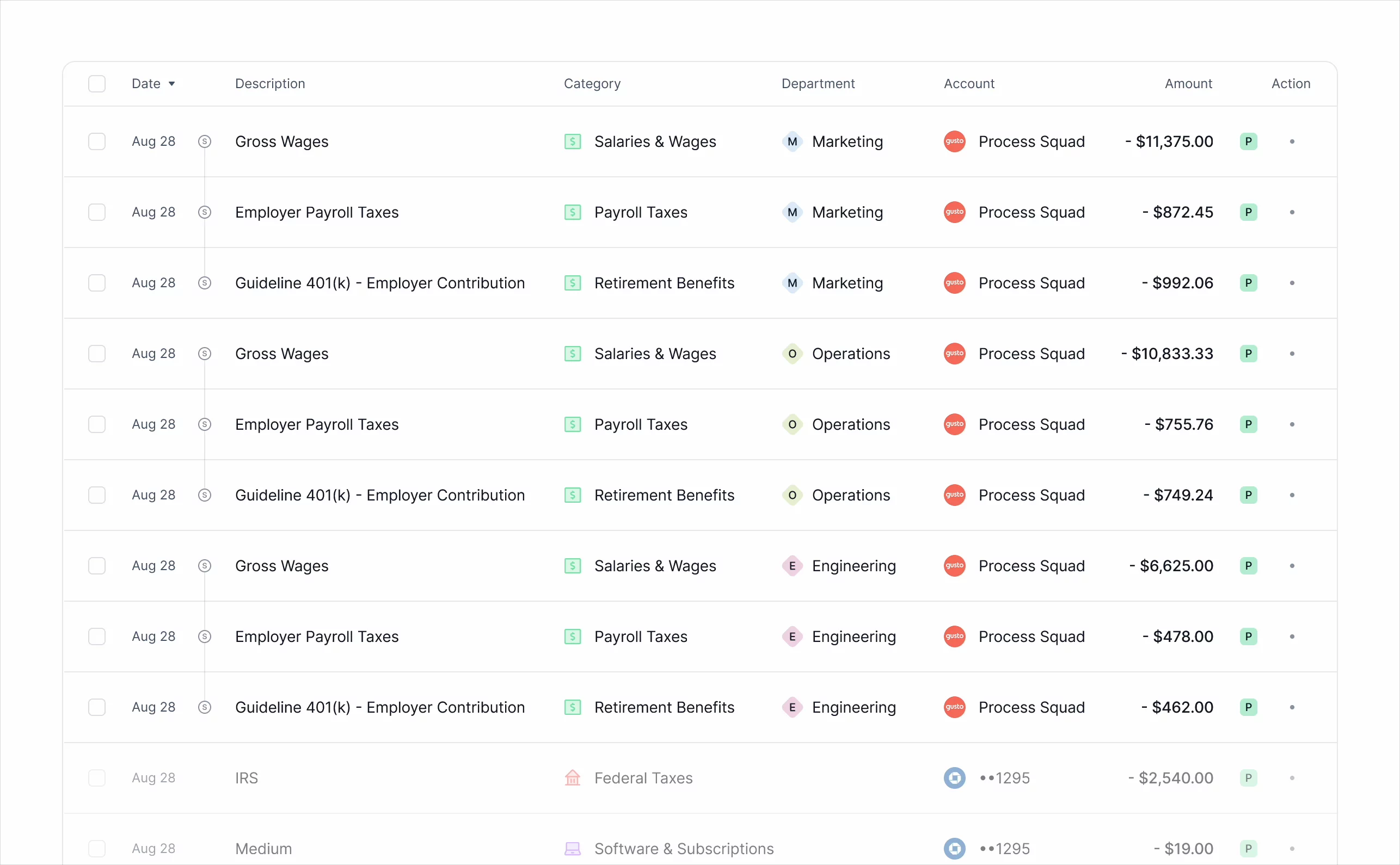
With our new direct integration, Kick now automatically syncs the below deductions in real time so you always have an accurate view of your payroll expenses.
So more businesses can take advantage, as part of the launch the integration will be available on the Kick Basic Plan.
If you’re on the Plus Plan, Kick will also automatically break out your Departments into Classes to track your payroll expenses across your teams. Any benefits-related bank transactions can now be matched to Gusto to ensure accuracy of your prepaid and payable accounts.
Get started by going to the Accounts tab and connect your Gusto account to Kick. If you don’t have a Gusto account you can create one here.
Kick now automatically creates Vendors for you, so you can see where you’re spending and stay in control of your finances.
Add any new Vendor from the Transactions or Directory tab and Kick handles it for similar transactions going forward.
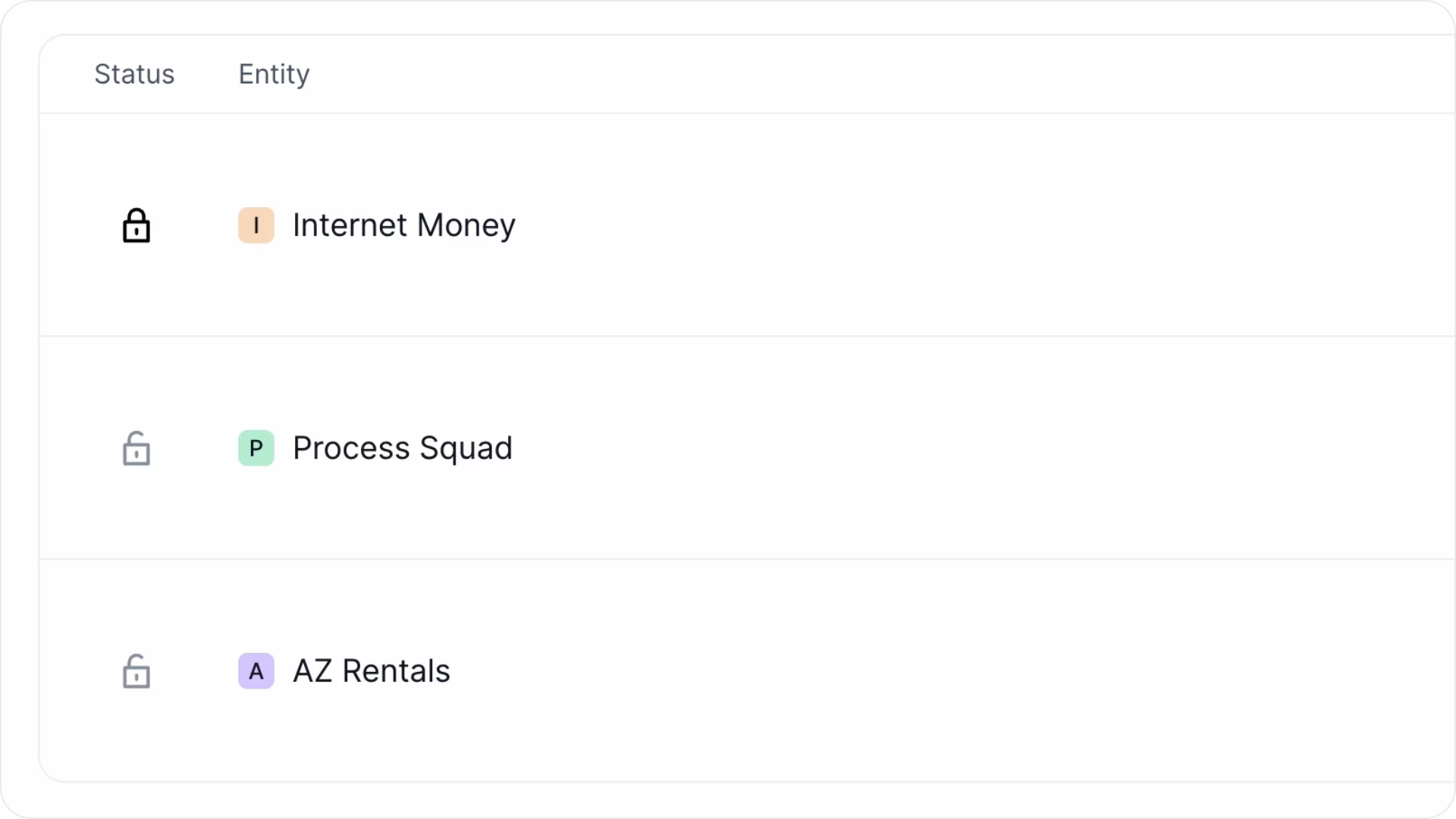
Designed with your Accountant in mind, use Locks to prevent changes across one or multiple business entities for reviewed periods.
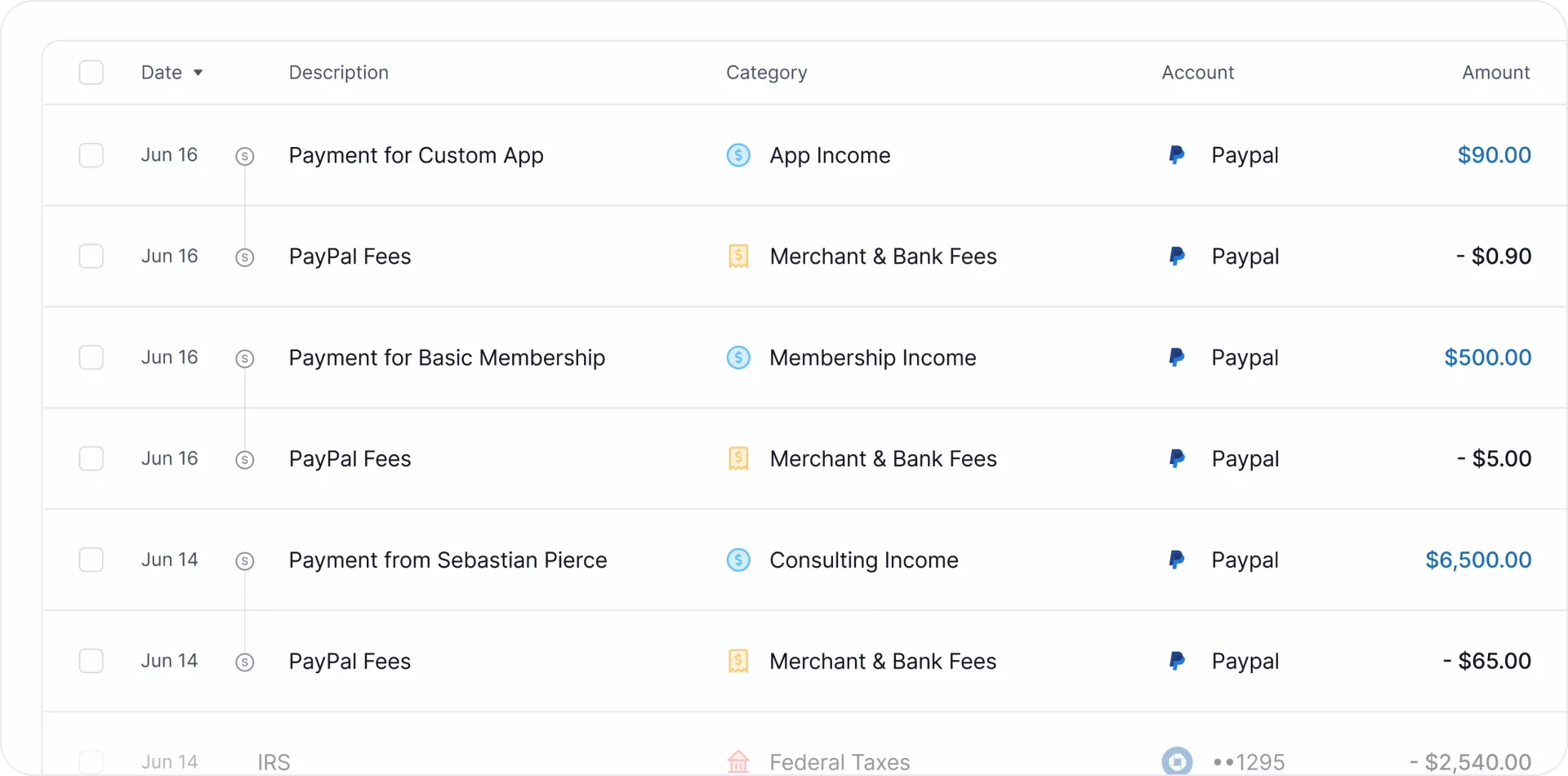
Excited to announce Kick's new partnership with PayPal. Along with improved reliability, our new direct integration automatically splits revenue and fees and syncs your loan, credit card, and product data – for immediate and accurate categorization.
• Categories: UI feedback and stats improvements for category management.
• Categories: Updated category UI for clarity and consistency.
• Transactions: Added bulk un-matching for transactions.
• Actions: Added entity filters to actions for more precise filtering.
• UI: Improved onboarding text for invoices.
• UI: Added support for pasting multiple values into tag input fields.
• UI: Improved Collapsible and SegmentBar components for better usability.
• Security: Communicate with the Kick team securely in our in-app only support system.
• Categories: Fixed calculation of total count to only include visible categories.
• Categories: Removed duplicate categories and updated obsolete real estate taxonomy.
• Transactions: Fixed PayPal line of credit and transaction code handling.
• Transactions: Fixed similar transactions loop and improved error messages for rule group changes.
• UI: Fixed conditional scroll in entities navigation.
• UI: Fixed layout and responsive design for various UI components.
• UI: Fixed modal layout and improved focus states for form inputs.
• Importer & extraction: Upgraded OpenAI package and improved seed data for better AI performance.
• Migration: Time to migrate prior financials from other softwares reduced from 4 hours to 15 minutes.
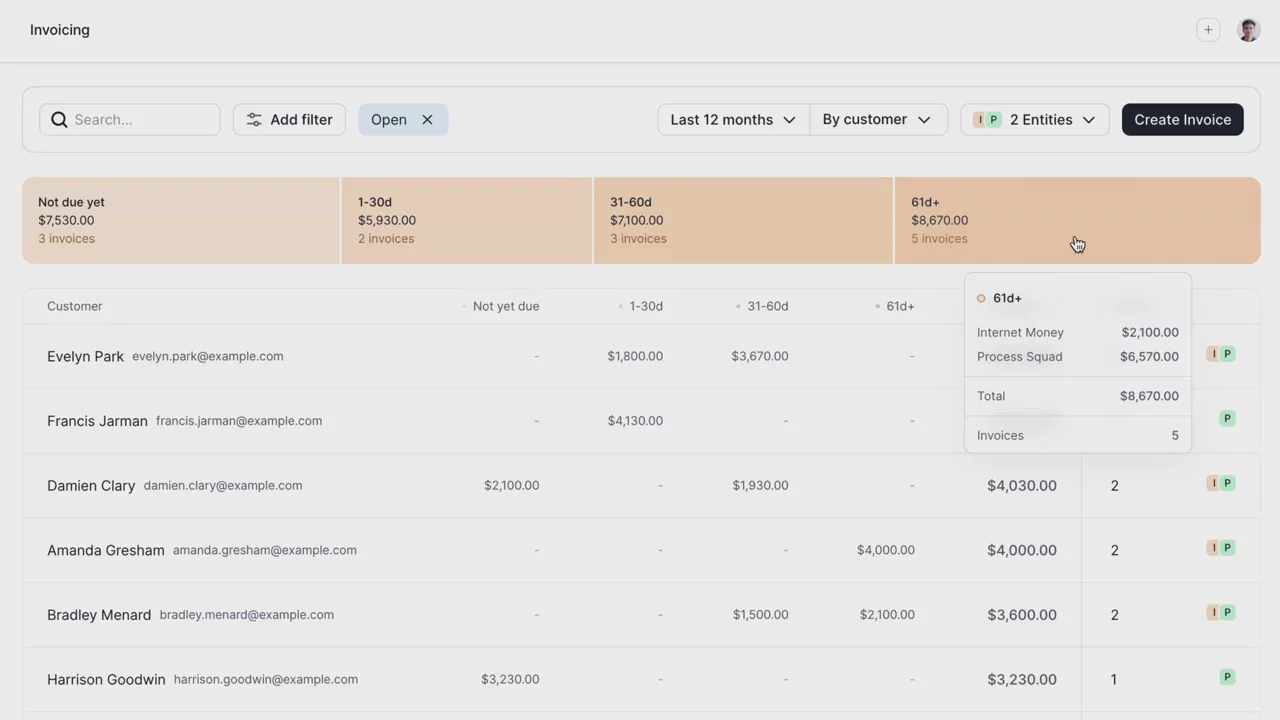
For the first time, view all customers across your Stripe accounts and businesses–in one place. Use the chart to set filters and zero in on the right open invoice.
Once you get paid, we auto-reconcile for you–no manual work required. To get started, open the Invoicing tab and connect your Stripe accounts. What payment or invoicing partner we should add next? Let us know on X.
You now have access to a dedicated Categories tab, where you can filter, sort, search and manage custom transaction categories.

You're now able to create one-off cash transactions which map to a cash account. Simply hit CMD + K or use the "Add" button at the top right of the screen in Kick.

• Categories: Custom categories can now include a description, which will show up when hovering over the custom category in the category picker.
• Categories: Updated "Assets" category made to automate your depreciation schedules.
• Integrations: Improved the UI of the Integrations tab to be cleaner and more in-line with the rest of Kick's UI.
• Search: Added search functionality to Integrations, Members, Accounts, Accounting Reports and Chart of Accounts pages.
• Transfer Matching: Improved the selection logic for the transfer matching modal to be more selective and produce less false positives.
• UI: Fixed layout and responsive design for various UI components (accounts filter, skipped actions button, class column, and more).
• UI: Use proper open/closed positioning and colors for carets in tree-based lists across the app.
• Transactions: Perform correct timezone conversion in the Transactions tab.
• Cashflow: Improve accuracy of monthly transaction aggregation when using the Classes Beta.
• Accounting: Reset opening balance to 0 for P&L accounts in transaction reports.
• Workspace: Fixed workspace switcher behavior for entities without an assigned name.
• Receipt Matching: Improved workspace routing logic when a receipt is texted to Kick and the user is assigned to multiple workspaces.
• Importer: Improved accuracy of parsing and extraction of PDF documents.
Starting the Kick Changelog!
Follow along and share your thoughts as we automate all the boring stuff together.